The right discipline for every asset.

Engineering, inspection, contracting, repair and maintenance across six sectors. No single method fits every asset: depending on the structure, the environment, the scope and the safety requirements, Global Remote deploys conventional inspection, advanced NDT, tank services, underwater diving, marine expertise, rope access or other specialist services, then repairs and maintains what it finds.

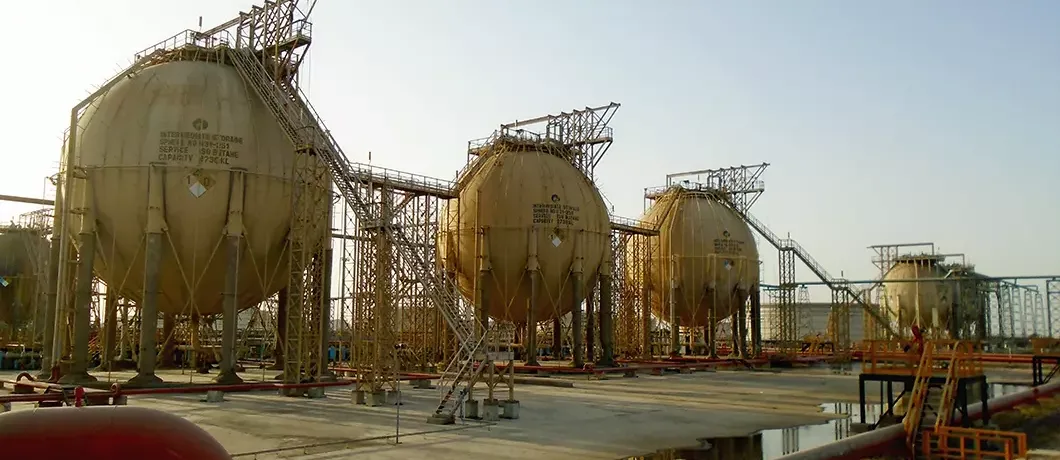
A row of spherical pressure-storage tanks with access stairways and pipework at a petrochemical plant.
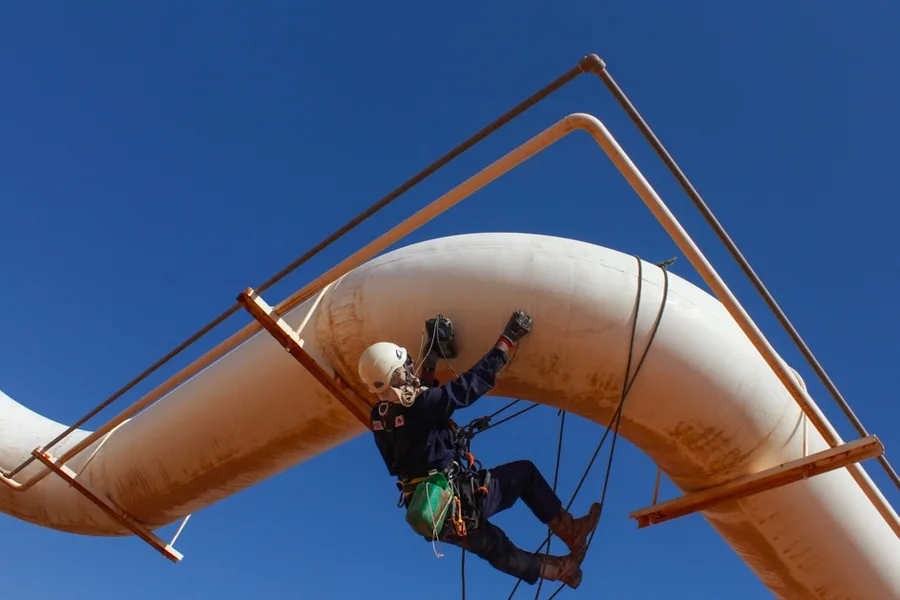
A rope-access technician harnessed to a large insulated pipe bend high on a process unit, against a clear blue sky.
Difficult-access plant and piping, reached on rope rather than by building a platform to it.
Oil and gas

Upstream and downstream, on stream.

Avoiding operational downtime is critical in this sector whether the asset is onshore or offshore, upstream or downstream. The work brings together conventional and advanced NDT, tank services, underwater inspection and maintenance crews, with rope access where a structure is hard to reach, so one contractor can inspect, repair and maintain the asset.

Inspection and survey. Underwater inspection in lieu of dry docking (UWILD), NDT by UT, MT, PT, ECI, TOFD, ACFM, LRUT and GUL, derrick inspection, dropped-object surveys, lifting gear surveys, vessel condition and class surveys for ABS and Bureau Veritas, remote imaging by CCTV, flare tip and flare line inspection, and stack and chimney inspection.

Maintenance and repair. Derrick maintenance, repair and assembly, flare tip to splash-zone work, heli-deck remedials, cathodic protection, steel renewals and bolt tensioning, blasting, marine-standard coating, piping composite repair systems, and decommissioning.
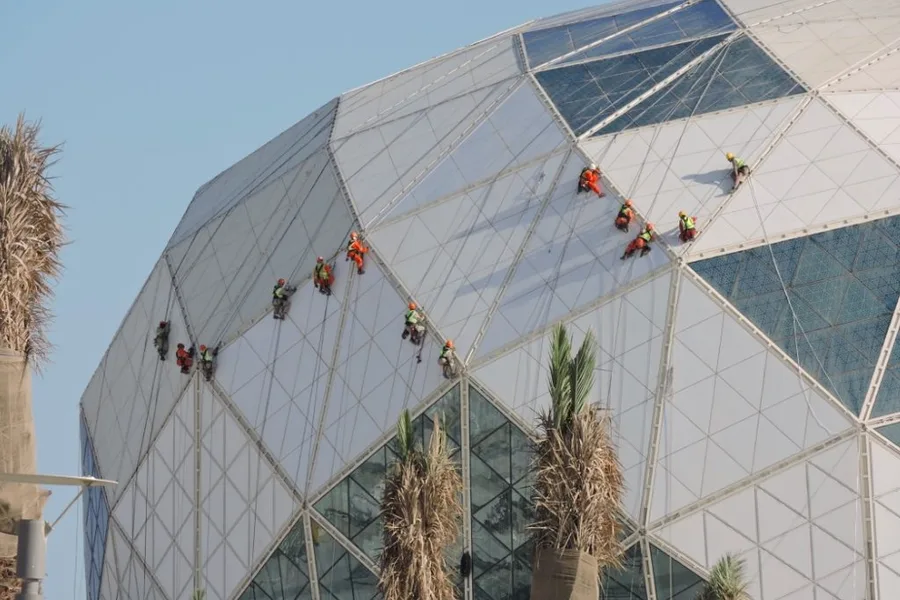
A line of rope-access technicians spread across the triangular glazed panels of a large geodesic dome.
A working programme run across an occupied building, with no scaffold and no closure.
Civil infrastructure

Multi-storey buildings through to bridges and power stations.

Civil work is broad ranging, and the access is usually combination access rather than rope alone. Because it is non-intrusive, the inspection, maintenance and repair programme runs concurrently, which keeps interference to the structure, the operations, the occupants and the public to a minimum.

Testing. General visual inspection, dropped-object surveys, paint inspection, penstock pipe inspection, theme park ride inspection, lifting gear surveys, NDT, mechanical and acoustic testing, half-cell testing, carbonation testing, cover meter testing, foundation settlement testing and core sampling.

Work. Complete facade repair, sealant application, blasting and painting, bolt tensioning, substrate repair and reinforcing, electrical fitting and wiring, aircraft warning lights and lightning protection, industrial cleaning, HVAC ducting, technical glazing installation, facade retrofits and integrated lighting.

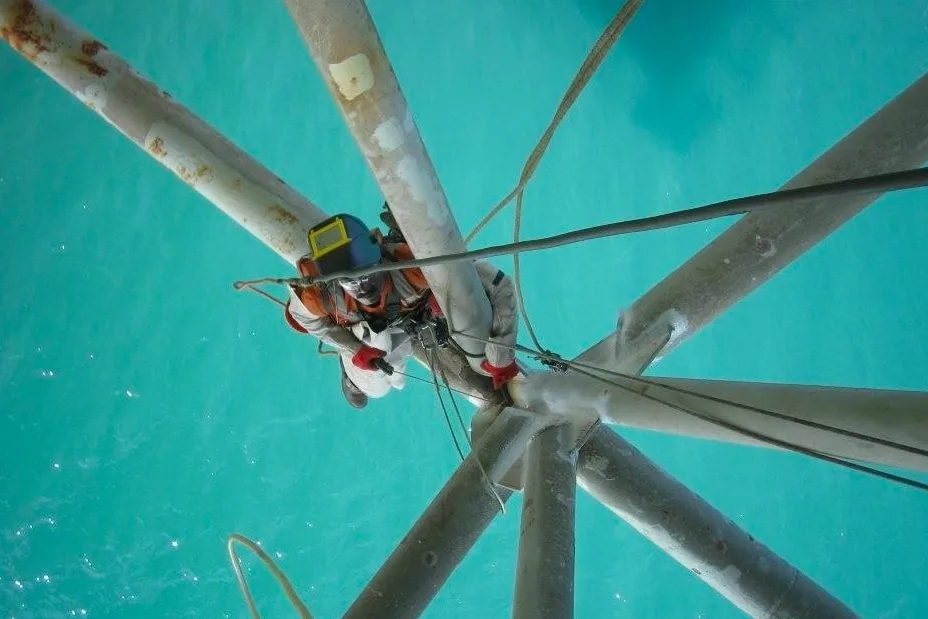
An aerial view of a technician working on the splash-zone bracing of a steel jetty structure above clear turquoise water.
Splash-zone work on a jetty structure, between the tide marks and above the divers.
Marine

Vessels, jetties and offloading facilities.

Avoiding operational downtime matters here for the same reason it does in a refinery: the asset earns while it is in service. Divers, marine crews, inspectors and rope access technicians work together, tailored to a marine client's demand for safety, quality and productivity.

Inspection and survey. Vessel condition and class survey for ABS and Bureau Veritas, shipyard and offloading facilities inspection, and restricted-access and confined-space entry.

Maintenance and repair. Blasting and painting, remedial steel fabrication and repair, shipyard and offloading facilities maintenance, mechanical and engineering support, electrical installations, and marine-standard coatings and sealant application.

One job of this shape: inspection, maintenance and repair on two LPG marine loading arms for SALPG, the Total France and Hindustan Petroleum joint venture.

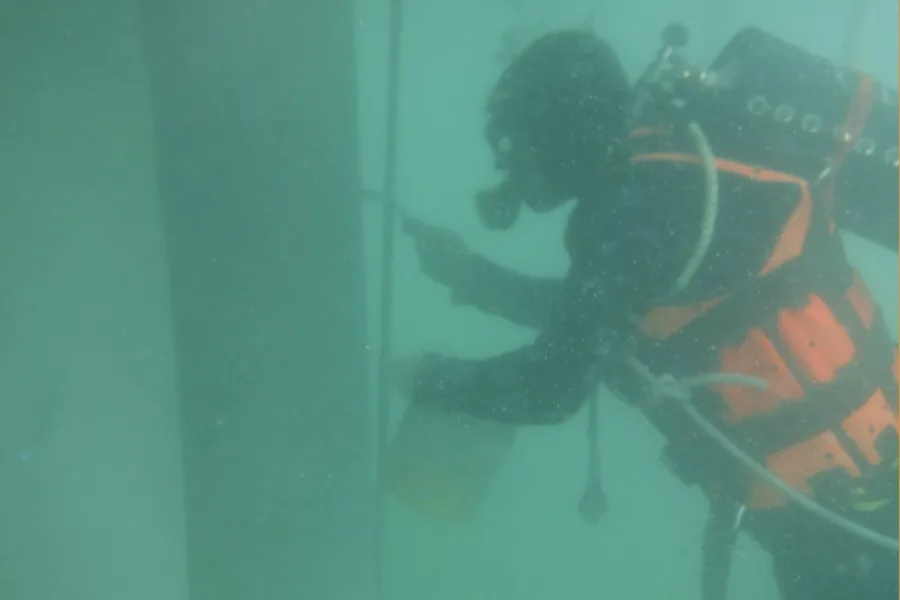
A Global Remote diver in an orange harness working against a submerged steel structure in green water.
Submerged structures get the same measurements as the ones above the waterline.
Underwater

Bridges, piers, pipelines and tank interiors.

The underwater environment is hard on structures and harder on the inspector, who has to evaluate scour, material condition and construction with limited visibility. Inspection covers submerged structures including bridges, piers, water tank interiors, water control structures, sub-aqueous pipelines and waterfront structures.

Inspection. Ultrasonic thickness measurement, underwater magnetic particle inspection, general visual inspection, cathodic protection measurement, seabed survey, survey of buried pipelines, marine growth survey, structural anomalies, cracks and dents, anode survey, UWILD inspections, image and video recording, and metrology.

Maintenance. Installation of clamps and bracings, underwater painting, block placing, geotextile laying, sheet-pile remedials, bolting and torquing, spool installation, marine growth removal, high-pressure jetting and steel structure repair.

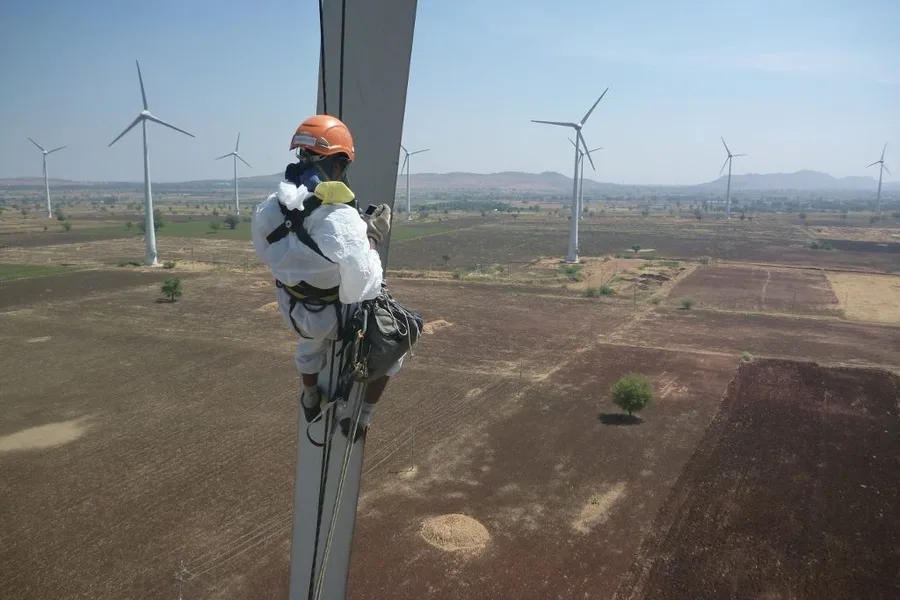
A technician on ropes working part-way up a wind turbine tower, with the rest of the wind farm on the plain behind.
Tower and blade work reached on rope, with the turbine still in the row.
Wind

Blades and towers, without a crane.

Rope access applied to wind infrastructure keeps downtime in a demanding environment minimised or avoided completely, and the programme is coordinated concurrently with operations.

Blade and tower services. Construction assembly support, inspection and installation of lightning protection systems, blade protection and aerodynamic systems such as leading-edge tape, stall strips and vortex generators, internal and external inspection and cleaning, laminate and coating repair, torque testing and replacement of landing bolts, and the installation, maintenance and inspection of fall-arrest systems.

Geotechnical

Steep slopes and rock faces, held in place.

The sixth sector is the one that is not a built asset at all. Stabilising and containing steep slopes, loose rock and potential earth falls is a long-term mitigation problem for rail and road systems, viaducts and dams, hydroelectric projects, open-cut and underground mines, and any exposed, friable or unstable face.

These hazards threaten project and subcontractor personnel, equipment, public infrastructure and environmental systems, so the answer has to be sustainable rather than a patch. Materials come from the world's leading manufacturers.

Rockfall defence and containment

Rock bolting, rock scaling, rock re-profiling and blasting, rockfall netting, high-energy barriers and shotcrete application.

Erosion control

Geogrids and meshes, shotcrete, biotextile and geotextile application, and soil pinning.

Vegetation management

Vegetation sustainability assessment, selective tree felling and scrub clearance, scrub replanting and vegetation seeding.

Terrain risk management

Terrain assessment and risk-management consultation at the tendering stage, and project-specific terrain safe-work practices for your own and your subcontractors' field operatives.

Which of these is your asset?

Send the structure, the constraint and the standard. Where Global Remote has done that exact thing before, the reply says where, and where it has not, the reply says so.

Send the asset

Key projects, named clients and award records sit on one page.

Key Projects