

Certifying the people who do this work, including Global Remote’s own.
Purpose-built centres in Chennai and Abu Dhabi, and courses at your own site where the guidelines allow it. IRATA rope access, GWO basic safety training, work and rescue at height, API inspector qualifications, ASNT methods and ASME code overviews.
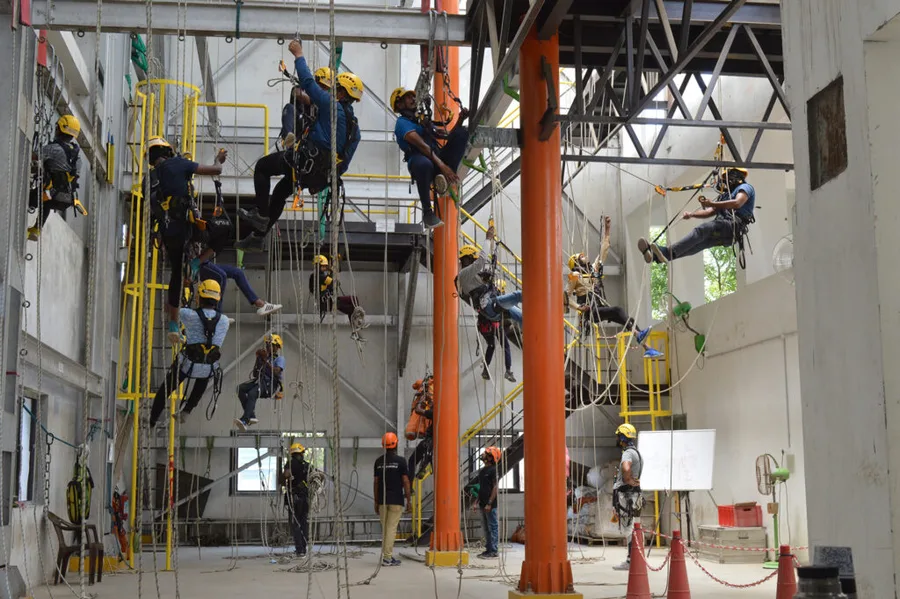
Six days, plus a day of assessment.
Global Remote is a specialist provider of height-safety training and consultancy for the energy, civil, marine and geotechnical sectors, and as an accredited trainer it delivers the syllabus of the IRATA-approved industrial rope-access courses.
The course runs to six days plus an additional day of assessment. That extra day is deliberate: it covers syllabus items beyond what IRATA requires, rather than teaching to the minimum.
The programmes comply with the guidelines set out by IRATA, the British Health and Safety Executive, and the British Advisory Committee for Work at Height Training syllabus.
The full portfolio runs from purpose-built facilities in Chennai and Abu Dhabi, or at a client's preferred location nationally or internationally, provided compliance with the IRATA guidelines can be met.
Grouped by the body that awards the certificate.
Which body awards it is the first thing a candidate's employer checks, so it is the first thing this list says. There is a growing international demand for IRATA-qualified riggers, NDT inspectors, welders, painters and blasters.
IRATA training
Delivered at Global Remote’s own centres as an IRATA operator and trainer. Levels 2 and 3 each require an approved certificate at the level below, 12 months of experience and 1,000 logged hours.
Send the level, the month and how many people.
Courses run at Chennai and Abu Dhabi, and at your own site where IRATA compliance can be met. Say which certificate your people need, roughly when, and how many are coming, and the reply comes back with dates.
An IRATA certification improves employment prospects on its own, and it compounds when it sits alongside an existing industrial qualification: there is a growing worldwide demand for IRATA-qualified riggers, non-destructive testing inspectors, welders, painters and blasters.
Training schedule
Next IRATA dates: on request. Send the month you have in mind and how many people, and the dates follow.
Ask about datesGWO training
GWO Basic Safety Training, delivered at the fixed training facility in Chennai. TÜV India certifies Global Remote against the GWO criteria for training providers.
Training schedule
Next GWO dates: on request. Send the month you have in mind and how many people, and the dates follow.
Ask about datesNON-IRATA WAH training
Height-safety training for people who work at height without being rope-access technicians.
Training schedule
Next work at height dates: on request. Send the month you have in mind and how many people, and the dates follow.
Ask about datesOther trainings
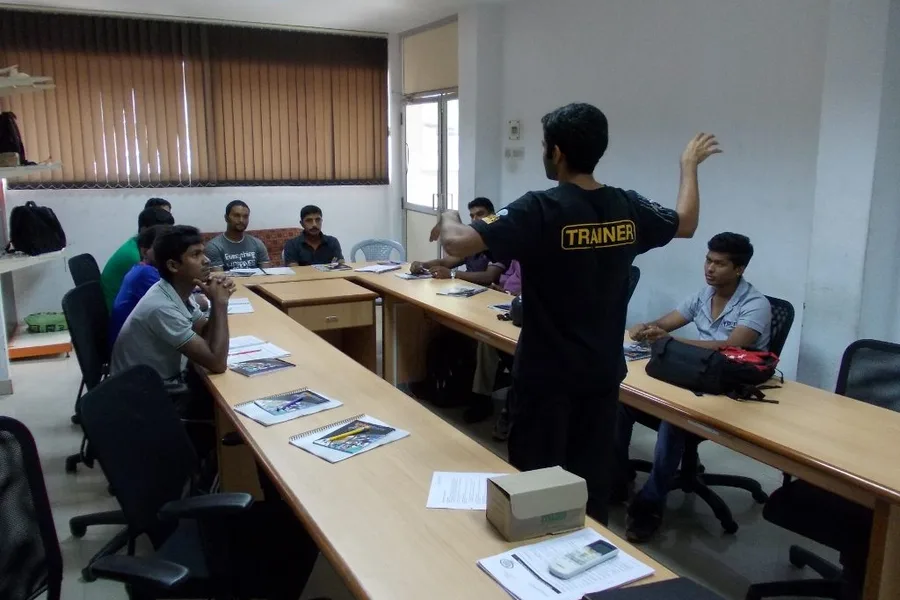
API inspector qualifications
American Petroleum Institute. The certifications a plant asks for by name when it appoints an inspector to a vessel, a line or a tank.
ASNT methods, Levels 1 and 2
American Society for Nondestructive Testing. Method by method, taught by a department whose group manager has held ASNT NDT Level III for over twenty years.
ASME and API code overviews
Shorter overview courses for engineers who have to read, apply or argue with the code rather than sit the inspector examination.
Training schedule
Next course dates: on request. Send the month you have in mind and how many people, and the dates follow.
Ask about dates